Keynote Speakers

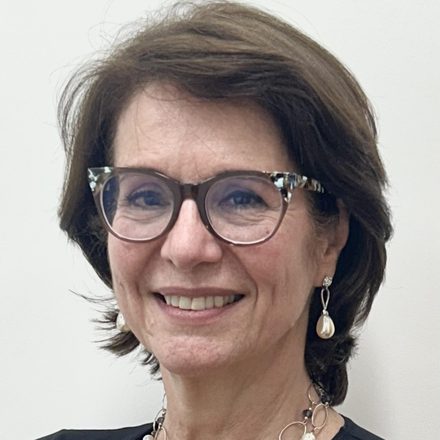
Portrait of Anna Helena Reali Costa

Sustainable and Resilient AI: from Optimizing Large Models to Forecasting Extreme Climate Events

Anna Helena Reali Costa

University of São Paulo (USP), Brazil

October 21, 2026 · 11:00 – 12:00

About the talk

Anna will speak about the relationship between Artificial Intelligence and sustainability as a two-way street. The first part of this talk will discuss the “sustainability of AI”, presenting Responsible AI strategies to reduce the environmental impact and energy consumption of Large Language Models (LLMs). The second part shifts the focus to “AI for sustainability”, which will show how advanced neural network architectures (RNNs and GNNs) can be applied to forecasting storm surges and complex ocean dynamics. The goal is to argue that computational efficiency and environmental resilience are not merely ethical choices, but the pillars of an AI that is technically superior and genuinely committed to the future of the planet.

Bio

Anna Helena Reali Costa is a Full Professor of Computer Engineering and the current Dean of the Polytechnic School of the University of São Paulo (USP). She holds a PhD from USP, carried out part of her research in robotics and computer vision at the Karlsruhe Institute of Technology (KIT), in Germany, and was a visiting researcher at Carnegie Mellon University (CMU), in the USA, investigating the integration of learning and planning for mobile robots. Among the strategic initiatives she leads, she directs the Center for Data Science (C2D/USP-Itaú) and is a researcher at the Center for Artificial Intelligence (C4AI/USP-IBM-FAPESP), at the Offshore Technology Innovation Centre (OTIC/USP-FAPESP-IPT-Shell) and at the Center for Artificial Intelligence and Machine Learning (CIAAM/USP). Her scientific work is dedicated to the fields of Artificial Intelligence and Machine Learning.

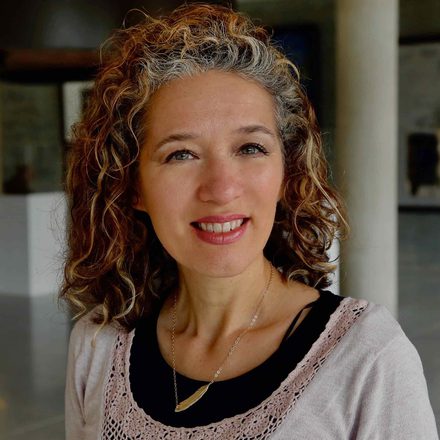
Portrait of Aline Villavicencio

Investigating Multilingual and Multimodal Idiomaticity Representation as a Case Study for Human and Model Language Interpretation

Aline Villavicencio

University of Exeter and University of Sheffield, United Kingdom

October 19, 2026 · 11:00 – 12:00

About the talk

The capabilities of large language models have gone from strength to strength, and their use is now pervasive in daily life. However, these models still face a serious challenge when dealing with languages outside of English and a few other higher resourced languages. Part of this talk will address some of the challenges in recent models, looking at strategies for language and vocabulary adaptation for improving representation of a variety of languages. Another challenge comes from specialised and figurative language, and I’ll discuss some of the techniques for handling non-literal language, such as terminology, idioms (make ends meet) and noun compounds (loan shark). These are an integral part of the mental lexicon of native speakers often used to express complex ideas and feelings in a more metaphorical or euphemistic way, but still represents a real challenge for current LLMs. In this talk, I will present an overview of the identification and multilingual modelling of idiomaticity, concentrating on what models seem to incorporate of idiomaticity, and present an initiative to construct a multilingual and multimodal idiomatic dataset.

Bio

Aline Villavicencio is a Professor of Natural Language Processing at the Department of Computer Science, University of Exeter, and affiliated with the Department of Computer Science, University of Sheffield (UK). She received a PhD (2003) and MPhil (1997) from the University of Cambridge (UK) and held postdoctoral positions at the University of Cambridge and University of Essex (UK). Currently a member of the ELLIS Society and a Visiting Professor at the Federal University of Rio Grande do Norte (Brazil), Aline was the Director of the Institute of Data Science and Artificial Intelligence at Exeter, and a Fellow at the Alan Turing Institute (2024-2026) also previously holding academic positions at Federal University of Rio Grande do Sul, Brazil (2005 – 2021) and University of Essex, UK (2017-2019). Her research interests include multiword expressions and idiomatic and specialised language, along with cognitively motivated NLP. She has co-edited special issues and books dedicated to these topics and has a prestigious journey as general/program chair of events such as PROPOR, EACL, ACL, among many others.

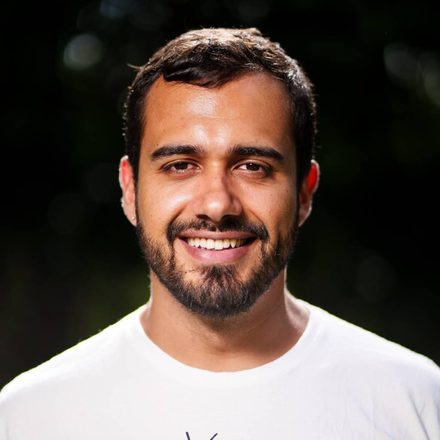
Portrait of Washington Luiz Miranda da Cunha

Sustainable and Responsible AI based on Data Engineering for Natural Language Processing

Washington Luiz Miranda da Cunha

State University of Campinas (UNICAMP), Brazil

October 20, 2026 · 11:00 – 12:00

About the talk

Large Language Models (LLMs), based on Artificial Intelligence techniques, have transformed Natural Language Processing (NLP), becoming a benchmark in tasks such as text classification, sentiment analysis, summarization, Q&A, among many others. However, their construction and adaptation require high computational costs, demanding specialized infrastructure and significant energy consumption, which leads to negative environmental impacts, such as CO2 emissions. The current model adopted by major players – based on the "Law of More" (more data, more hardware, more energy) – is unsustainable and unfeasible for countries with limited resources, such as Brazil, hindering international competitiveness. In this speech, we propose an alternative to this dominant approach, focusing on innovative solutions based on data engineering and advanced AI techniques. The goal is to increase the efficiency of the models, reducing computational costs and energy consumption, contributing to more sustainable and accessible development.

Bio

Washington Cunha holds a PhD in Computer Science from the Federal University of Minas Gerais (2024), and is a Professor at the Institute of Computing at the State University of Campinas (UNICAMP). He is also a member of the steering committee and general secretary of the National Institute of Science and Technology in Responsible Artificial Intelligence for Computational Linguistics, Information Processing and Dissemination (INCT-TILDIAR). His research focuses on the areas of Information Retrieval, Machine Learning, and Natural Language Processing, with an emphasis on the development of responsible, sustainable, and ethical Artificial Intelligence methods, combining cutting-edge research, the development of AI applications for real-world problems, and initiatives aimed at promoting ethical, responsible, and sustainable Artificial Intelligence, the central theme of his lecture. Washington has already received numerous academic recognitions: for scientific contributions in AI, best Ph.D. dissertation, excellence in article review, and the distinction of Mineiro of the Year in the field of Education.