
STIL
17th Symposium on Information Technology and Human Language
ABOUT
The Symposium on Information Technology and Human Language (STIL) is the most important event in Brazil for researchers interested in publishing significant and innovative results related to Natural Language Processing (NLP), in general (and not only in Portuguese). Since 2023, STIL has been held annually with the support of the Brazilian Computer Society (SBC) and the Special Interest Group on NLP (CE-PLN). In 2026, the 17th STIL will be held in Cuiabá, MT, Brazil, jointly with BRACIS 2026 (36th Brazilian Conference on Intelligent Systems), ENIAC 2026 (22nd National Meeting on Artificial and Computational Intelligence), and KDMILE 2026 (14th Symposium on Knowledge Discovery, Mining and Learning).
STIL 2026 consists of a main event and two sub-events: the XI Workshop on the Description of Portuguese (JDP 2026) and the XI Undergraduate Research Workshop on Information Technology and Human Language (TILic 2026). The symposium is multidisciplinary and covers several areas related to human language technology, such as Linguistics, Computer Science, Psycholinguistics, and Information Science, bringing together participants from academia and industry.
Invited Speaker
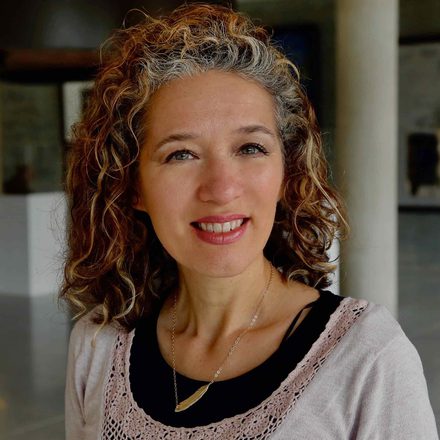
Keynote
Investigating Multilingual and Multimodal Idiomaticity Representation as a Case Study for Human and Model Language Interpretation
Aline Villavicencio, University of Exeter and University of Sheffield, United Kingdom
October 19, 2026 · 11:00 – 12:00 · Pantanal Auditorium
CALL FOR PAPERS
The program committee of the 17th STIL invites submissions of original research papers, both in long format (10 pages + references) and short format (6 pages + references).
TOPICS OF INTEREST
Relevant topics for STIL 2026 include, but are not limited to:
General topics
Tools and resources for NLP
LLMs, neural and vector representations applied to NLP
Multilingualism and multilingual methods
Evaluation and empirical methods in NLP
Corpus linguistics
Knowledge representation and ontologies
NLP applied to digital humanities
Psycholinguistics, cognitive modeling, and linguistic theories
Speech processing
Multimodality and NLP
Ethics and sociotechnical aspects of NLP systems
Interpretability and model analysis
Approaches to NLP with low resources or reduced computation
Environmental impacts of NLP research (green NLP)
NLP Applications
Morphological analysis, tagging, and preprocessing
Phonetics and phonology applied to NLP
Syntactic representations and parsing
Semantic representation and processing
Discourse and pragmatics
Dialogue and interactive systems
Information retrieval, extraction, and classification
Machine translation
Natural language generation and summarization
Question answering
Sentiment analysis, opinion mining, and argument mining
Terminology, lexicology, lexicography, phraseology
Textual inference
Speech recognition, speech synthesis, and speaker identification
PAPER SUBMISSION GUIDELINES
Paper Types
STIL 2026 accepts submissions of long and short papers, as follows:
Long papers
Should describe completed, original, and unpublished work with significant results and will be presented orally.
Short papers
May report work in progress, negative results, opinion papers, or applications/demonstrations, and will be presented as posters.
Language
Papers may be written either in Portuguese, English, or Spanish.
Length
The length of the papers is defined as follows:
Long papers
Up to 10 pages of content (including tables and figures), with unlimited references.
Short papers
Up to 6 pages of content, with unlimited references.
Authors should indicate whether they accept that a long paper be presented as a poster, if so recommended by the reviewers. Submissions must include a Limitations section, Ethics Statement, and a disclosure of generative AI usage (extra page allowed).
Format
Papers must follow the SBC format, available on the SBC website and also on Overleaf.
Publication
Accepted papers will be published in the SBC Digital Library (SOL – SBC OpenLib) and in the ACL Anthology, and indexed in DBLP, ensuring wide visibility and international dissemination of the scientific production presented at the event.
Review
All papers submitted to STIL will be evaluated by at least two experts in the field
The review process will be double-blinded, therefore papers must not contain any information revealing the identity of the authors, either in the header or in the body of the text.
Self-citations that may reveal the authors' identity should be avoided. For example, instead of writing "As we previously showed (Silva, 2005)…", authors should write "Silva (2005) showed that …".
Review Policy
All authors of each submitted paper MUST serve as reviewers, IF they meet at least one of the following criteria:
- Hold a PhD degree or equivalent.
- Have at least three published papers in the NLP area.
- Have previously published in STIL.
Submission Policy
By submitting a paper to STIL 2026, the authors agree that at least one of them will register for the conference and present the work if it is accepted.
Registration must be completed before the camera-ready deadline and in the category defined by the organization.
Authors cannot be added to a paper after it has been accepted. The list of authors provided at the time of submission must be considered final. In exceptional cases where a paper includes more than 10 authors, authors are requested to contact the Program Chairs via email at the time of submission, as JEMS does not support more than 10 authors.
Anonymity Period
The following rules and guidelines aim to protect the integrity of the double-blinded review process and ensure fair evaluation of submissions.
The rules refer to the anonymity period, which runs from one month before the submission deadline until the acceptance or rejection notification.
Papers withdrawn during this period are no longer subject to these rules.
- During the anonymity period, it is not allowed to publicly release a non-anonymous version of the paper (for example, on preprint servers). Versions include papers with essentially the same scientific content, even if with minor differences (title, structure, or length).
- You may submit an anonymous version to the conference if a non-anonymous version was published online before the start of the anonymity period. The submitted version must not reference the non-anonymous version, and the program chairs must be informed of its existence.
- The non-anonymous version must not be updated during the anonymity period, and authors are asked not to promote it on social media or take other actions that could compromise the double-blinded review process.
- It is allowed to make an anonymous version of the paper publicly available (for example, on OpenReview or arXiv), even during the anonymity period.
Note: Although it is not forbidden to publish a non-anonymous version before the anonymity period begins, doing so makes maintaining double-blinded review more difficult. For this reason, it is recommended to wait until the end of the anonymity period before making it public.
Submission System
Long and short papers must be submitted in PDF format through the JEMS system https://jems3.sbc.org.br/stil2026/ up to the defined deadlines.
For questions about the conference, please contact:
IMPORTANT DATES
Paper registration (abstract)
March 30, 2026
April 20, 2026
April 30, 2026
Grace period*: May 2nd, 2026
Paper submission deadline (long and short papers)
March 30, 2026
April 20, 2026
May 06, 2026
May 15, 2026
Grace period*: May 17th, 2026
Authors notification
July 11, 2026
Camera-ready version
July 26, 2026
* The grace period is an additional deadline after the official one, during which JEMS remains open for registrations/submissions, given the deadline that contains the grace period information.
Note
All deadlines are 23:59 UTC-12:00 – anywhere on Earth!
ACCEPTED PAPERS
Long Papers
- A Comparative Framework for Diachronic Lexical Semantic Change in Brazilian Portuguese Political Discourse
João Victor M. Correa; Oto Araújo Vale; Renato Moraes Silva - Vidya Syl: A syllable division algorithm for Brazilian Portuguese adhering to the Common Orthographic Vocabulary of the Portuguese Language
Roges Horacio Grandi; Leandro Krug Wives; Maria Jose Bocorny Finatto; Raquel Salcedo Gomes; Bianca Pasqualini - Tail Smoothing and Cross-Lingual Volatility: Evaluating Estimative Uncertainty in Large Language Models for Brazilian Portuguese
Renato O. Miyaji; Pedro L. P. Corrêa - Curupira: Arquiteturas Híbridas Transformer-BiLSTM para Detecção de Discurso Ofensivo em Português Brasileiro
Gabrielly Alves Gomes; Iago de Sousa Aragão; Patricia Medyna Lauritzen de Lucena Drumond - Prompt Engineering for Small Language Models: Evaluating ICL for Portuguese Sentiment Analysis
André da F. Schuck; Gabriel L. Garcia; João Renato R. Manesco; Pedro Henrique Paiola; Leandro A. Passos; João Paulo Papa - Sector-Specific Financial Sentiment Lexicons for Portuguese: Evidence from Brazilian Stock News
Antônio Artur de Souza; Mateus Binda; Adriana S. Pagano - CorPop26: Uma atualização das 3.000 Palavras Mais Frequentes do CorPop de 2018
Roges Horacio Grandi; Bianca Pasqualini; Maria Jose Bocorny Finatto; Leandro Krug Wives; Raquel Salcedo Gomes - Como Nossos Pais: Princípios Clássicos para a Avaliação de Sistemas de IA (Principles on Evaluation Methodology)
Livy Real; Altigran Soares da Silva - Do LLM Judges Agree with Humans? Evaluating Financial Commentaries from Material Facts
Gabriel Assis; Daniela Vianna; Livy Real; Marina Ramalhete Masid; João Nepomuceno; Eduardo Rottschaefer; Altigran Soares da Silva; Aline Paes - Balancing Coherence and Granularity in Legal Topic Modeling: A BERTopic-based Study on Portuguese Appellate Court Decisions
Marjory S. S. Lima; Felipe R. Ahad; Vih A. S. Silva; Thiago M. Ventura; Josiel M. Figueiredo; Allan G. de Oliveira - Empirical Study Towards RBAMR-News: a Rule-Based AMR Parser for News in Portuguese
Maria Julia Bernardo Comarim; Ariani Di Felippo - Leakage-Aware Evaluation of Brazilian Clinical Notes for ICU Mortality Prediction: A Study on the BRATECA Dataset
Felipe André Bach Alves; Heloísa Oss Boll; Mariana Recamonde-Mendoza - MultiDomainYT-ToxBR: Um Corpus Multidomínio de Comentários Tóxicos do YouTube em Português Brasileiro
Gabriel Z. de Souza; Isabel H. Manssour - Clonagem de Voz por IA para o Português Brasileiro em Contexto Assistivo: Desafios Comparativos em Cinco Ferramentas de Síntese de Fala
Luiz G. dos Santos; Nathalia Borges; Matheus; Luciana C. L. F. Borges; Thais R. Kempner; Eunice P. S. Nunes - Evaluating Portuguese Tokenizers as Morpheme Sequence in Relation to LLM Downstream Performance
Guilherme L. Mello; Marcelo Finger - Textbook-Enriched Training for Language Models: Boosting Answer Quality in Specialized Contexts
Lucas B. Bulcão Mota; Larrissa Dantas; Daniela Barreiro Claro; Aline Paes; Claudia Freitas; Marlo Souza; Helena Caseli; Livy Real - Compression-Based Linguistic Complexity Metrics in Automatic Essay Scoring
Felipe Ribas Serras; Igor Cataneo Silveira; Denis Deratani Mauá; Marcelo Finger - Text segmentation with mixed data: evaluating symbolic and neural approaches
Amanda Sammer do N. Brandão; Felipe Bomfim Sanches; Alfredo Sena; Laila Mota; Daniela Barreiro Claro; Rerisson Cavalcante - A Comparison of Commonly Used Automatic Evaluation Metrics for Open-Ended Tasks in Portuguese
Eduardo D. Faé; Dennis Giovani Balreira; Viviane Pereira Moreira - Legal Nugget Extraction for Granular Retrieval over Long Jurisprudential Texts
Lucas Pereira; Erick Brito; Roberto Lotufo; Jayr Pereira - Exploring Hybrid Pre-training for Automatic Essay Scoring
Miguel M. Carpi; Igor C. Silveira; Denis D. Mauá; Marcelo Finger - Validating Semantic Content in Sentence Simplification using OpenIE and Relational Graphs
Samuel Rios da Silva; Larrissa Dantas; Daniela Barreiro Claro; Aline Paes; Maria José Finatto; Rerisson Cavalcante; Silvana Ribeiro - Bootstrapping Text Anomaly Detection with LLM-Generated Weak Supervision
Fabio Masaracchia Maia; Anna Helena Reali Costa - Towards Uniform Meaning Representation for Brazilian Portuguese: Building a First UMR-Annotated Dataset
Adriana S. Pagano; Magali Duran; Federica Gamba; Daniel Zeman - The Impact of Language and Portuguese Intralinguistic Variation on NL2SQL
Ricardo Trainotti Rabonato; Lilian Berton - Evaluating LLM-based Triple Extraction for Knowledge Graph Fact-Checking in Portuguese
Roney Lira de Sales Santos; Lucas dos Santos; João Pedro Holanda Souza - Autonomous Fact-Checking: Integrating Local Inference and Adversarial NLP Attacks
Rômulo Henrique Nascimento Duarte; Humberto Nunes de Lira; Vivianny Khatly Medeiros Pereira; Isaac Sebastian Lima de Araújo; Allan Gabriel da Cunha Vasconcelos; Yuri de Almeida Malheiros Barbosa - Extending Enhanced Universal Dependencies to Nheengatu: Semi-Automated Control and Raising Annotation
Dominick Maia Alexandre; Leonel Figueiredo de Alencar - Fusão Híbrida para Recuperação de Informação Jurídica Brasileira
Flávio Soriano; Guilherme Evangelista; Celso França; Gisele Pappa; Wagner Meira Jr.; Marcos Gonçalves
Short Papers
- DANTE – A Treebank of Tweets in Brazilian Portuguese
Ariani Di Felippo; Norton Trevisan Roman - Novo CorPop Saúde: Data Collection for Simplified Health Communication in a Brazilian Patient Information Leaflet Corpus
Bianca Pasqualini; Maria J. B. Finatto; Eduarda Bertotto; Paula Salem Carpio; Roges Horacio Grandi; Leandro Krug Wives - Beyond Aggregate Scores: A Diagnostic Analysis of Portuguese LLM Evaluation Suites
Gustavo Hochgraf; Gabriel Assis; Aline Paes; Fabio G. Cozman - ENEM Essay Feedback Using LLM-Augmented Prompts
Flavio Carvalho; Vanessa Soares; Eduardo Bezerra; Gustavo Guedes - Developing Multilingual Multiword Expressions (MWEs) Resources: An Annotated Corpus of Fables following the PARSEME guidelines
Letícia Guedes Guimarães; Adriana Pagano; André V. Lopes Coneglian; Aline Villavicencio - Expressões multipalavras no discurso de fóruns sobre saúde mental: desenvolvimento de um corpus em inglês e português brasileiro
Gabriela Berndt; Sofia Serrano; Mariana Jin; Adriana Pagano - EpiCorpus-BR: A Named Entity Recognition Corpus for Epidemiological Documents in Portuguese
Christian Freitas; Lilian Berton
PROGRAM CHAIRS

STIL 2026 Chair
Ariani Di Felippo
UFSCar

STIL 2026 Chair
Aline Paes
UFF
TECHNICAL PROGRAM COMMITTEE
Adriana Pagano — Universidade Federal de Minas Gerais (UFMG)
Anderson Castro Soares de Oliveira — Universidade Federal de Mato Grosso (UFMT)
André Carvalho — Universidade Federal do Amazonas (UFAM)
Arnaldo Candido Junior — Universidade Estadual Paulista “Júlio de Mesquita Filho” (UNESP)
Bryan Khelven da Silva Barbosa — Universidade Federal de São Carlos (UFSCar)
Carlo Marcelo Revoredo da Silva — Universidade de Pernambuco (UPE)
Carlos Alberto Severiano Junior — Instituto Federal de Educação, Ciência e Tecnologia de Minas Gerais (IFMG)
Carlos Augusto Prolo — Universidade Federal do Rio Grande do Norte (UFRN)
Carlos Caminha — Universidade Federal do Ceara (UFC)
Cassio Faria Silva — Faculdade de Tecnologia de Marilia (FATEC Marilia)
Christopher Dane Shulby — Universidade de São Paulo (USP)
Claudia Bosaipo Sales da Silva — Instituto Militar de Engenharia (IME)
Claudia Dias de Barros — Universidade Federal de São Carlos (UFSCar)
Claudio Elizio Calazans Campelo — Universidade Federal de Campina Grande (UFCG)
Cleyton Mario de Oliveira Rodrigues — Universidade de Pernambuco (UPE)
Daniela Barreiro Claro — Universidade Federal da Bahia (UFBA)
Denis Deratani Mauá — Universidade de São Paulo (IME-USP)
Dennis Balreira — Universidade Federal do Rio Grande do Sul (UFRGS)
Diana Santos — Linguateca / Universidade de Oslo (UiO)
Eduardo Bezerra — Centro Federal de Educação Tecnológica Celso Suckow da Fonseca (CEFET/RJ)
Eduardo C. Goncalves — Escola Nacional de Ciências Estatísticas (ENCE)
Eduardo Jose da Silva Luz — Universidade Federal de Ouro Preto (UFOP)
Elisa Marchioro Stumpf — Universidade Federal do Rio Grande do Sul (UFRGS)
Eloize Rossi Marques Seno — Instituto Federal de Educação, Ciência e Tecnologia de São Paulo (IFSP)
Emerson Cabrera Paraiso — Pontifícia Universidade Católica do Paraná (PUCPR)
Evelin Amorim — Instituto de Engenharia de Sistemas e Computadores, Tecnologia e Ciência (INESC TEC)
Fabio Lobato — Universidade Federal do Oeste do Para (UFOPA)
Gabriela Wick Pedro — Universidade Federal de São Carlos (UFSCar)
Gustavo Guedes — Centro Federal de Educação Tecnológica Celso Suckow da Fonseca (CEFET/RJ)
Gustavo Zanatta Bruno — Universidade do Vale do Rio dos Sinos (UNISINOS)
Helena Cameron — Centro Interdisciplinar de História, Culturas e Sociedades / Universidade de Évora (CIDEHUS/UE)
Helena de Medeiros Caseli — Universidade Federal de São Carlos (UFSCar)
Helen Cristina de Mattos Senefonte — Universidade Estadual de Londrina (UEL)
Hilario Tomaz Alves de Oliveira — Instituto Federal de Educação, Ciência e Tecnologia do Espírito Santo (IFES)
Hugo Gonçalo Oliveira — Universidade de Coimbra (UC)
Igor Cataneo Silveira — Instituto de Matemática e Estatística da Universidade de São Paulo (IME-USP)
Isabel Harb Manssour — Pontifícia Universidade Católica do Rio Grande do Sul (PUCRS)
Ivone Penque Matsuno — Universidade Federal de Mato Grosso do Sul (UFMS)
Jackson Wilke da Cruz Souza — Universidade Federal da Bahia (UFBA)
Jayr Pereira — Universidade Federal do Cariri (UFCA)
Joao Paulo Papa — Universidade Estadual Paulista “Júlio de Mesquita Filho” (UNESP)
Joel Luis Carbonera — Universidade Federal do Rio Grande do Sul (UFRGS)
Jonnathan Carvalho — Instituto Federal de Educação, Ciência e Tecnologia Fluminense (IFF)
Jorge Baptista — Universidade do Algarve (UAlg)
Jose Antonio Macedo — Universidade Federal do Ceara (UFC)
Jose Wellington Franco da Silva — Universidade Federal do Ceara (UFC)
Julio Cesar Soares dos Reis — Universidade Federal de Viçosa (UFV)
Juscimara Avelino — Universidade Federal de Pernambuco (UFPE)
Leandro Krug Wives — Universidade Federal do Rio Grande do Sul (UFRGS)
Leandro Passos — Universidade Estadual Paulista “Júlio de Mesquita Filho” (UNESP)
Leonardo Rocha — Universidade Federal de São João del-Rei (UFSJ)
Leonel Figueiredo de Alencar — Universidade Federal do Ceara (UFC)
Lilian Berton — Universidade Federal de São Paulo (UNIFESP)
Lilian Teixeira de Sousa — Universidade Federal da Bahia (UFBA)
Livy Maria Real Coelho — Instituto de Computação da Universidade Federal do Amazonas (IComp/UFAM)
Lucas Weihmann — Universidade Federal de Santa Catarina (UFSC)
Lucelene Lopes — Instituto de Ciências Matemáticas e de Computação da Universidade de São Paulo (ICMC-USP)
Luciana Borges — Universidade Federal de Mato Grosso (UFMT)
Marcos Fernando Lopes — Universidade de São Paulo (USP)
Maria das Graças Volpe Nunes — Instituto de Ciências Matemáticas e de Computação da Universidade de São Paulo (ICMC-USP)
Maria Jose Bocorny Finatto — Programa de Pós-Graduação em Letras da Universidade Federal do Rio Grande do Sul (PPGLet/UFRGS)
Marlo Vieira dos Santos e Souza — Universidade Federal da Bahia (UFBA)
Matheus Bernardelli de Moraes — Centro de Tecnologia da Informação Renato Archer (CTI Renato Archer)
Maucha Andrade Gamonal — Universidade Federal de Juiz de Fora (UFJF)
Miguel Arjona Ramirez — Universidade de São Paulo (USP)
Miguel Oliveira Jr. — Universidade Federal de Alagoas (UFAL)
Myriam Regattieri De Biase da Silva Delgado — Universidade Tecnológica Federal do Paraná (UTFPR)
Norton Trevisan Roman — Escola de Artes, Ciências e Humanidades da Universidade de São Paulo (EACH-USP)
Omar Andres Carmona Cortes — Instituto Federal de Educação, Ciência e Tecnologia do Maranhão (IFMA)
Oto Araujo Vale — Universidade Federal de São Carlos (UFSCar)
Pablo Andretta Jaskowiak — Universidade Federal de Santa Catarina (UFSC)
Pablo Gamallo — Universidade de Santiago de Compostela (USC)
Patricia Medyna Lauritzen de Lucena Drumond — Universidade Federal do Piauí (UFPI)
Paula Christina Figueira Cardoso — Universidade Federal do Para (UFPA)
Paulo Mann — Universidade Federal do Rio de Janeiro (UFRJ)
Rafael Anchieta — Instituto Federal de Educação, Ciência e Tecnologia do Maranhão – Campus Caxias (IFMA – Campus Caxias)
Raphael de Souza Rosa Gomes — Universidade Federal de Mato Grosso (UFMT)
Raquel Meister Ko Freitag — Universidade Federal de Sergipe (UFS)
Renata Vieira — Universidade de Évora (UE)
Renato Fileto — Universidade Federal de Santa Catarina (UFSC)
Renato Moraes Silva — Instituto de Ciências Matemáticas e de Computação da Universidade de São Paulo (ICMC-USP)
Ricardo M. Marcacini — Instituto de Ciências Matemáticas e de Computação da Universidade de São Paulo (ICMC-USP)
Roana Rodrigues — Universidade Federal de Sergipe (UFS)
Robson Fidalgo — Universidade Federal de Pernambuco (UFPE)
Rodrigo Minetto — Universidade Estadual de Campinas (UNICAMP)
Roney Lira de Sales Santos — Universidade Federal da Bahia (UFBA)
Saullo Haniell Galvao de Oliveira — Escola de Matemática Aplicada da Fundação Getúlio Vargas (FGV EMAp)
Sergio Antonio Andrade de Freitas — Universidade de Brasília (UnB)
Thiago Alexandre Salgueiro Pardo — Instituto de Ciências Matemáticas e de Computação da Universidade de São Paulo (ICMC-USP)
Thiago Ferreira — Universidade Federal Fluminense (UFF)
Thiago Henrique Silva — Universidade Tecnológica Federal do Paraná (UTFPR)
Thiago Meirelles Ventura — Universidade Federal de Mato Grosso (UFMT)
Valeria Delisandra Feltrim — Universidade Estadual de Maringá (UEM)
Valeria de Paiva — Nuance Communications, Inc. (Nuance)
Viviane Pereira Moreira — Universidade Federal do Rio Grande do Sul (UFRGS)
Vladia Pinheiro — Universidade de Fortaleza (UNIFOR)
Additional Reviewers
Felipe Ribas Serras — Instituto de Matemática e Estatística da Universidade de São Paulo (IME-USP)
Joao Pedro Tomaszewski — Universidade Federal de Pelotas (UFPel)
Joao Vitor Vaz — Universidade Federal de Minas Gerais (UFMG)
Matheus Yasuo Ribeiro Utino — Instituto de Ciências Matemáticas e de Computação da Universidade de São Paulo (ICMC-USP)
Wesley Carvalho — Universidade de São Paulo (USP)
CONTACT INFORMATION
Questions or comments can be sent to the chairs of each event:
STIL: Aline Paes (alinepaes@ic.uff.br) and Ariani Di Felippo (ariani@ufscar.br).
JDP: Maucha Gamonal (mauchaandrade@gmail.com) and Daniela Costa (souza.costa@ufms.br).
TILiC: Paula Cardoso (paulastm@gmail.com) and Lilian Teixeira (liliantsousa@gmail.com).